-
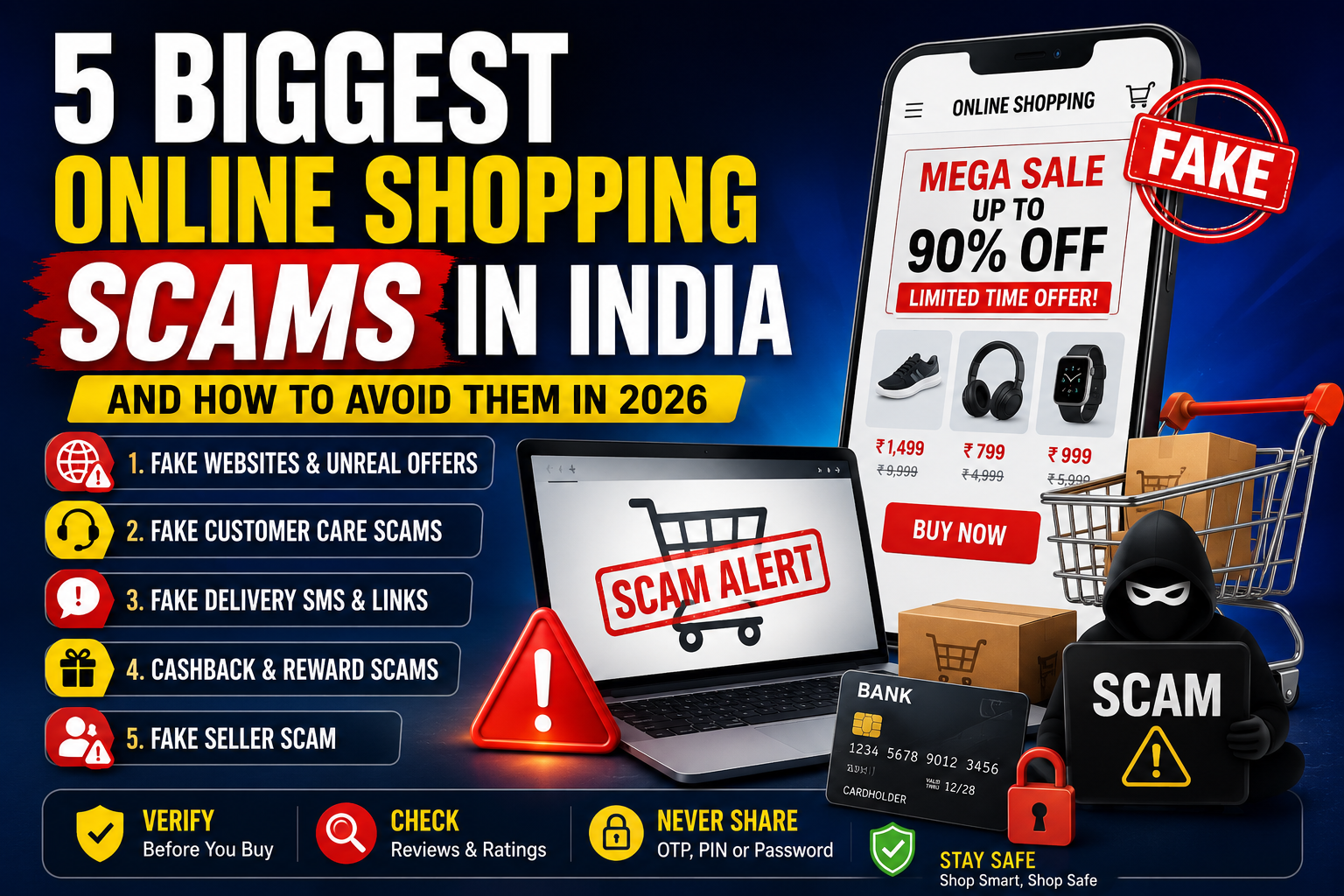
5 Biggest Online Shopping Scams in India — And How to Avoid Them in 2026
14 May,2026 - 06:05 AMOnline shopping has become a daily habit for millions of Indians. From smartphones and fashion to groceries and gadgets, everything is now just a few clicks away.
But as online shopping grows, scams and frauds are increasing rapidly too.
Many shoppers lose money because they:
-
Trust fake offers
-
Click unknown links
-
Buy from fake sellers
-
Ignore warning signs
The worst part?
Most scams look completely real at first.In this guide, we will cover the biggest online shopping scams in India in 2026 and how you can protect yourself while shopping online.
1. Fake “90% OFF” Websites
One of the most common scams today involves fake shopping websites that copy the design of popular brands.
These websites usually advertise:
-
Massive discounts
-
Limited-time sales
-
Luxury products at unbelievable prices
For example:
-
₹80,000 iPhone for ₹19,999
-
Branded shoes at 85% OFF
-
Smart TVs for extremely low prices
How the Scam Works
After payment:
-
Product never arrives
-
Fake product is delivered
-
Website disappears
-
Customer support stops responding
Warning Signs
-
Newly created websites
-
No customer reviews
-
Poor grammar/spelling
-
Only prepaid payment options
-
Unrealistic discounts
Safety Tip
Always verify:
-
Website URL
-
HTTPS security lock
-
Customer reviews
-
Social media presence
If the deal looks impossible, it is probably fake.
2. Fake Customer Care Number Scam
Scammers create fake customer support numbers on:
-
Google search
-
Social media
-
Telegram channels
Victims searching for:
-
Refund help
-
Return requests
-
Delivery issues
accidentally contact scammers instead of the real company.
What Happens Next
The scammer may ask you to:
-
Install remote access apps
-
Share OTPs
-
Scan fake QR codes
-
Share bank details
Within minutes, money can disappear from your account.
Important Rule
Real customer support agents NEVER ask for:
-
OTPs
-
UPI PIN
-
Debit card PIN
-
Full CVV details
3. Fake Delivery SMS & WhatsApp Links
Many users receive messages like:
“Your parcel is waiting. Pay ₹10 delivery fee.”
These links often lead to:
-
Fake payment pages
-
Malware websites
-
Bank phishing portals
Common Tricks
-
Fake courier names
-
Fake tracking links
-
Urgent payment requests
-
“Package blocked” warnings
How to Stay Safe
Never open suspicious links from unknown numbers.
Instead:
-
Open the official app directly
-
Track orders from the company website
-
Verify sender identity carefully
4. Cashback & Reward Point Scams
Scammers love using fake cashback messages because people naturally get excited about rewards.
Examples include:
-
“You won ₹5,000 cashback”
-
“Claim expired reward points”
-
“Get free shopping voucher”
These scams often redirect users to:
-
Fake login pages
-
Malware apps
-
Fraudulent payment gateways
Biggest Red Flag
If you must pay money to “unlock” cashback, it is almost certainly a scam.
Safe Practice
Use only official cashback apps and verified platforms.
5. Fake Seller Scam on Marketplace Platforms
Even trusted marketplaces sometimes contain fake sellers.
These sellers may:
-
Upload copied images
-
Offer unusually low prices
-
Sell duplicate products
-
Deliver damaged or fake items
This is common in:
-
Electronics
-
Fashion
-
Luxury accessories
How to Identify Fake Sellers
Check:
-
Seller ratings
-
Number of reviews
-
Product review photos
-
Return policy
-
Warranty information
Smart Tip
Avoid buying expensive products from newly created sellers with very few ratings.
Bonus Tips to Stay Safe While Shopping Online
Always Use:
-
Trusted shopping apps
-
Strong passwords
-
Two-factor authentication
-
Verified payment methods
Avoid:
-
Public Wi-Fi payments
-
Unknown links
-
Deals that look unrealistic
-
Sharing OTPs with anyone
What To Do If You Get Scammed
If you suspect fraud:
Immediately:
-
Block your bank card
-
Change passwords
-
Contact customer support
-
Report cyber fraud
India Cyber Crime Portal:
You can report scams through the official cybercrime portal or helpline 1930.
Fast action increases the chance of recovering money.
Final Thoughts
Online shopping is safe when done carefully, but scammers are becoming smarter every year.
The best protection is awareness.
Before buying anything online:
-
Verify websites
-
Compare offers
-
Check seller ratings
-
Never trust unrealistic discounts
A few extra minutes of checking can save you from losing thousands of rupees.
Shop smart, stay alert, and always think before clicking.
-